Why Vertical Blinds Suit Sunshine Coast Living
Vertical blinds are a practical solution for Sunshine Coast homes where sunlight, heat, and coastal glare can change quickly through the day. Their adjustable slats, also called vanes or louvres, make it easy to control light and airflow while maintaining privacy. They glide neatly along a track, draw to one side or split in the middle, and park compactly so you keep more of your view. The sleek look suits modern interiors and works well across a wide range of windows, including wide windows and larger windows that other window coverings struggle to span.
Because the slats tilt to the desired angle, you can balance light and privacy through the day. Tilt the blades toward the window to reduce glare on screens in living rooms and media rooms. Open the blinds completely when you want fresh natural light, then close them at night for privacy control in bedrooms. With the right fabrics, you can improve the comfort of your house by reducing heat and filtering sunlight.
Light Control and Privacy Control for Large Windows and Doors
Light control is the standout strength of verticals. You can adjust the slats in small steps to fine-tune how much light enters a room. This helps you control light for different tasks, whether you need bright conditions for morning routines or low light for relaxation.
Use these simple patterns to manage light and privacy through the day:
- Morning: Angle vanes to bounce sunlight onto ceilings and walls. This keeps glare low while filling the room with natural light.
- Midday: Tilt slats to block direct sun on wide windows facing north or west to reduce heat and glare.
- Evening: Close the blind for maintaining privacy while still letting in a soft glow via translucent fabrics.
Fabric choices affect performance. Translucent fabrics soften light and reduce glare without making the room feel closed in. Blockout fabrics are ideal for media rooms and bedrooms that need a darker setting. Many ranges include durable fabrics that resist fading, handle heat better, and clean easily. If you prefer a firmer blade profile, PVC options hold a crisp line and are easy to wipe.
How to Measure for Vertical Blinds and Achieve a Perfect Fit
Accurate measuring is the key to a perfect fit, smooth installation, and long-term convenience. Before you measure, decide whether the blind will sit inside the window frame or outside it.
Inside the frame
- Measure the width at the top, middle, and bottom of the window. Record the smallest width.
- Measure the height at the left, centre, and right. Record the smallest height.
- Check for squareness and note any tilts in the frame that may affect the track or brackets.
Outside the frame
- Measure the exact measurements you want the blind to cover. Add extra width beyond the frame to improve light and privacy at the edges.
- Confirm there is space for brackets above the window and enough clearance around handles and nearby doors.
Helpful tips:
- Use a steel tape, write down each measure as you go, and label every window.
- Note the side you prefer for the controls to suit furniture and doorways.
- For large windows, consider split stacking so panels balance weight across the track and open from both sides.
If this feels complex, book a professional check. A trained installer will confirm measuring details and choose brackets and track systems that suit your window and interior.
How to Install Vertical Blinds: A Practical Step-by-Step Process
If you choose to install vertical blinds yourself, work carefully and follow the product instructions:
- Mark out the bracket positions level with a spirit level. Check that there is enough room for the vanes to rotate without hitting the window frame.
- Fix brackets securely into suitable anchors. Use the correct screws for timber, masonry, or steel.
- Mount the track onto the brackets. Ensure the carriers run freely along the entire width.
- Clip the vanes or blades into the carriers. Confirm each vane is seated properly.
- Attach the wand or chain control and test the tilt and draw.
- Adjust end stops so the blind stacks where you want it, either to one side or split in the centre.
- Final checks: confirm the blind is level, the slats rotate without snagging, and the stack does not block doors or pathways.
Installing vertical blinds on large spans is easier with two people. For sliding doors and patio doors, mount the track high enough that the louvres clear door handles and glide past any protrusions.
Custom Made Options: Fabrics, Colours, Textures, and Modern Design
Custom-made verticals let you tailor the look and performance to each room. Choose from a wide range of fabrics, colours, and textures to suit your style and the functionality you need.
Popular options include:
- Blockout fabric for bedrooms and media rooms where darkness and privacy control matter.
- Translucent fabrics that soften light while keeping a view and a sense of space.
- PVC or moisture tolerant options for spaces that need easy cleaning.
- Where suitable, motorisation is available on selected blind types; ask during your measure and quote.
- Coordinated finishes so the track, brackets, and controls match your interior colour palette.
A custom-made approach also fits tricky windows more easily. If you have an angled ceiling, a corner window, or a recess that is out of square, your installer can select the right process and hardware to achieve the perfect fit. Custom work can still be delivered at an affordable price when you focus on the rooms that benefit most, such as living rooms and larger windows that need strong light and privacy control.
Vertical Blind Solutions for Sliding Doors and Patio Doors
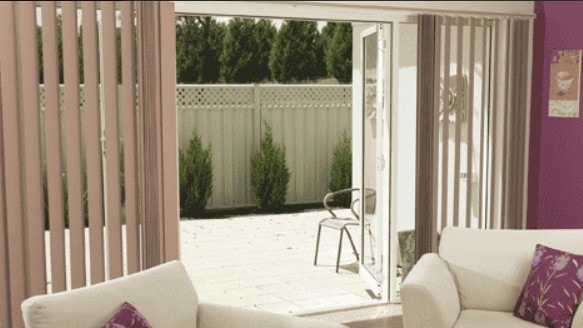
Verticals are ideal for sliding doors and patio doors because the panels stack compactly to one side and allow easy passage. You can choose to draw everything to one side, or set a centre opening so the stack splits evenly. Consider these points:
- Clearance: check the door handle and any security screen. The louvres must rotate freely without hitting hardware.
- Stacking choice: one side is simple for narrow spaces, while a split draw reduces stack width on either side for balance.
- Track strength: long spans need a sturdy track and quality carriers to keep movement smooth after many cycles.
- Control side: place the control away from the main traffic path for convenience and safety.
With good planning, you can install vertical blinds that look sleek, work reliably, and suit high-use doors without getting in the way.
Buying Blinds Online vs Local Supply in Australia
You can buy blinds online or book a local measure and install. Each pathway has pros and cons:
Blinds online
- Can offer quick comparisons of colours, fabrics, and price ranges.
- Works best when you are confident with measuring, selecting track options, and choosing the right brackets.
Local supply and installation in Australia
- A consultant measures, checks the window frame, and confirms the right mounting method.
- You gain expert advice on light control, heat, and fabric performance for the local climate.
- Installation is handled for you, which helps on complex spans, corner windows, and sliding doors.
If you compare both, weigh the convenience of a full service against the time you spend measuring and installing vertical blinds yourself. For large or wide windows, local support often delivers better long-term results.
Cleaning Tips and Care: Keep Your Verticals Fresh and Functional
Simple care keeps quality blinds looking new for years. Try these cleaning tips and routines:
- Routine dusting: close the vanes and run a vacuum with a brush attachment down each slat, then reverse tilt and repeat.
- Spot cleaning: use a damp cloth on marks. Test in a hidden area first, especially with patterned fabrics.
- Deeper freshen up: unclip individual slats if the product allows and lay them flat for a gentle clean. Avoid harsh scrubbing that distorts the fabric.
- Hardware check: wipe the track, brackets, and carriers, then run the wand from end to end to confirm smooth travel.
- Sun management: if one area gets strong sunlight, rotate the stack side occasionally so the same blades are not always exposed.
Good care protects colour and fabric, helps the carriers last longer, and supports smooth operation. Regular measuring checks also help if you notice a vane sitting lower than the others. Many systems let you adjust the bottom weights or hanger clips so everything aligns neatly.
Modern Design Ideas That Balance Style and Functionality
Verticals suit a wide range of interiors, from coastal to contemporary. Use these ideas to match style and performance:
- Layer with curtains: pair translucent verticals with soft curtains for added insulation and a hotel look in bedrooms.
- Mix textures: choose woven fabrics to add depth, or flat finishes for a minimalist interior.
- Colour planning: neutral colour tones reduce visual clutter in small spaces, while strong colours can frame windows in open-plan areas.
- Room by room: use blockout in sleeping spaces, translucent in living rooms, and pvc in high traffic or easy-clean zones.
- Smart control: where suitable, motorisation is available on selected blind types; discuss during your measure and quote, especially for very wide windows where daily operation is frequent.
Final Thoughts
Vertical blinds are a versatile solution for large windows, sliding doors, and patio doors on the Sunshine Coast. With careful measuring, the right track and brackets, and fabrics chosen for your climate and lifestyle, you can control light, reduce heat and glare, and keep the interior feeling open and fresh. Whether you prefer a simple wand control or, where suitable, motorisation on selected blind types, verticals offer a modern, practical way to achieve your desired balance of light and privacy across the whole home.
Ready to install vertical blinds that fit perfectly and look the part in every room? Book a FREE in-home measure & quote with Harlequin Blinds & Security for custom made verticals, quality fabrics, and a smooth installation from local specialists.
Works Cited
Australian Competition and Consumer Commission. “Blinds, Curtains and Window Fittings Guide.” Product Safety Australia, 19 Nov. 2014, www.productsafety.gov.au/consumers/be-safe-around-the-home/use-products-inside-the-home-safely/blinds-curtains-and-window-fittings-guide. Accessed 18 Nov. 2025.
Department of Climate Change, Energy, the Environment and Water. “Windows.” energy.gov.au, www.energy.gov.au/households/windows. Accessed 18 Nov. 2025.
Department of Climate Change, Energy, the Environment and Water. “Seasonal Tips to Save Energy.” energy.gov.au, www.energy.gov.au/households/household-guides/seasonal-advice. Accessed 18 Nov. 2025.
Queensland Government. “Blind and Curtain Cords.” qld.gov.au, 16 Dec. 2024, www.qld.gov.au/law/your-rights/consumer-rights-complaints-and-scams/product-safety-for-consumers/safety-advice-and-warnings/around-the-home/curtain-and-blinds-cords. Accessed 18 Nov. 2025.
Your Home. “Shading.” yourhome.gov.au, www.yourhome.gov.au/passive-design/shading. Accessed 18 Nov. 2025.
Sustainability Victoria. “Home Windows and Shading for Energy Efficiency.” sustainability.vic.gov.au, 12 Jan. 2021, www.sustainability.vic.gov.au/energy-efficiency-and-reducing-emissions/building-or-renovating/build-for-energy-efficiency/key-principles-of-energy-efficient-design/windows-and-shading. Accessed 18 Nov. 2025.
Frequently Asked Questions:
How do I measure for vertical blinds to achieve a perfect fit?
Decide on inside or outside the window frame. For inside mounts, measure the width at the top, middle, and bottom, and the height on the left, centre, and right, then use the smallest numbers. For outside mounts, take exact measurements of the area you want to cover and add a little extra width to improve light and privacy at the edges. Note the control side, bracket space, and any tilt or angle in the frame. Accurate measuring helps the installer select the right brackets, track, and panel stack that suit your interior and windows.
Can I install vertical blinds myself, or should I book professional installation?
You can install vertical blinds yourself by fixing the brackets level, mounting the track, clipping the blades, and testing the tilt and draw. For larger windows and doors, professional installation brings convenience and ensures the process handles tricky frames, long spans, and precise alignment. If you prefer a hands-off option, book a FREE in-home measure and quote so a specialist can confirm hardware, installation method, and perfect fit.
Which fabrics are best for light control and privacy in different rooms?
Choose fabrics to match the function of each space. Translucent fabrics soften glare and keep a fresh feel in living rooms and larger windows. Blockout fabric is ideal for bedrooms and media rooms where privacy control and darkness matter. PVC and other durable fabrics are easy to wipe clean and suit high-use spaces. With custom-made options, you can match colours, textures, and modern design to your style while maintaining light and privacy.
How do I clean and maintain vertical blinds so they last?
Close the vanes and vacuum with a brush attachment, then reverse the tilt and repeat. Use a damp cloth for spots and avoid harsh scrubbing that could distort the fabric. Wipe the track, check brackets and carriers, and make sure the blind draws smoothly to one side or with a centre split. Rotate which side the stack parks on if one area gets strong sunlight, so the same blades are not always exposed to heat and glare. Regular care keeps colour, quality, and functionality looking sleek and performing well.